
The Power of Discipline (Not Just Diet)
I’m going to be gut-honest with you. A month ago, right after we got back from the beach, I caught my reflection in the mirror while getting dressed and had the thought I’d been dodging for years: I had become my father. Same face. Same glasses. Same hair. And now, the same round belly I used to tease him about. Ouch. That was a wake-up call.
Then I got on the scale, and the talking scale said the words out loud: “Body weight, 305 pounds.” I had never weighed that much in my life. I knew it was a danger to my heart, and I didn’t want to have a heart attack and leave Linda alone. I wanted to be a better witness through my health. I wanted to look better and feel better. Those are strong motivators — strong enough to get past the “I’ll eat what I want, when I want” mindset that had run my life for years.
Let’s be honest: that’s still a hard decision when you love convenience-store junk food the way I do. Living in Chattanooga doesn’t help — Moon Pies and Little Debbies, my two favorite foods, are both made right here. But sticking around for Linda, and serving God with a body I haven’t wrecked, matters more to me than serving my appetite.
Once you cross that threshold — once you actually decide life matters more than convenience — gutting out a new way of eating gets a lot less complicated.
I decided against the shot-and-pill route. Those are too new, without decades of research behind them, and I wasn’t willing to risk poisoning my body chasing a shortcut. I also knew I wouldn’t be able to get back in the gym until I dropped some weight first.
No shots. No pills. No gimmicks. Just a decision.
Today I’m seventeen pounds lighter, and honestly, I feel like a different man. More energy. Clearer head. Fewer headaches. A little more pride when I look in the mirror. My pants haven’t been this loose in years. I’m not resting on that, though — I’ve still got another thirty pounds to go. Onward, Christian soldier.
The Tool: Intermittent Fasting
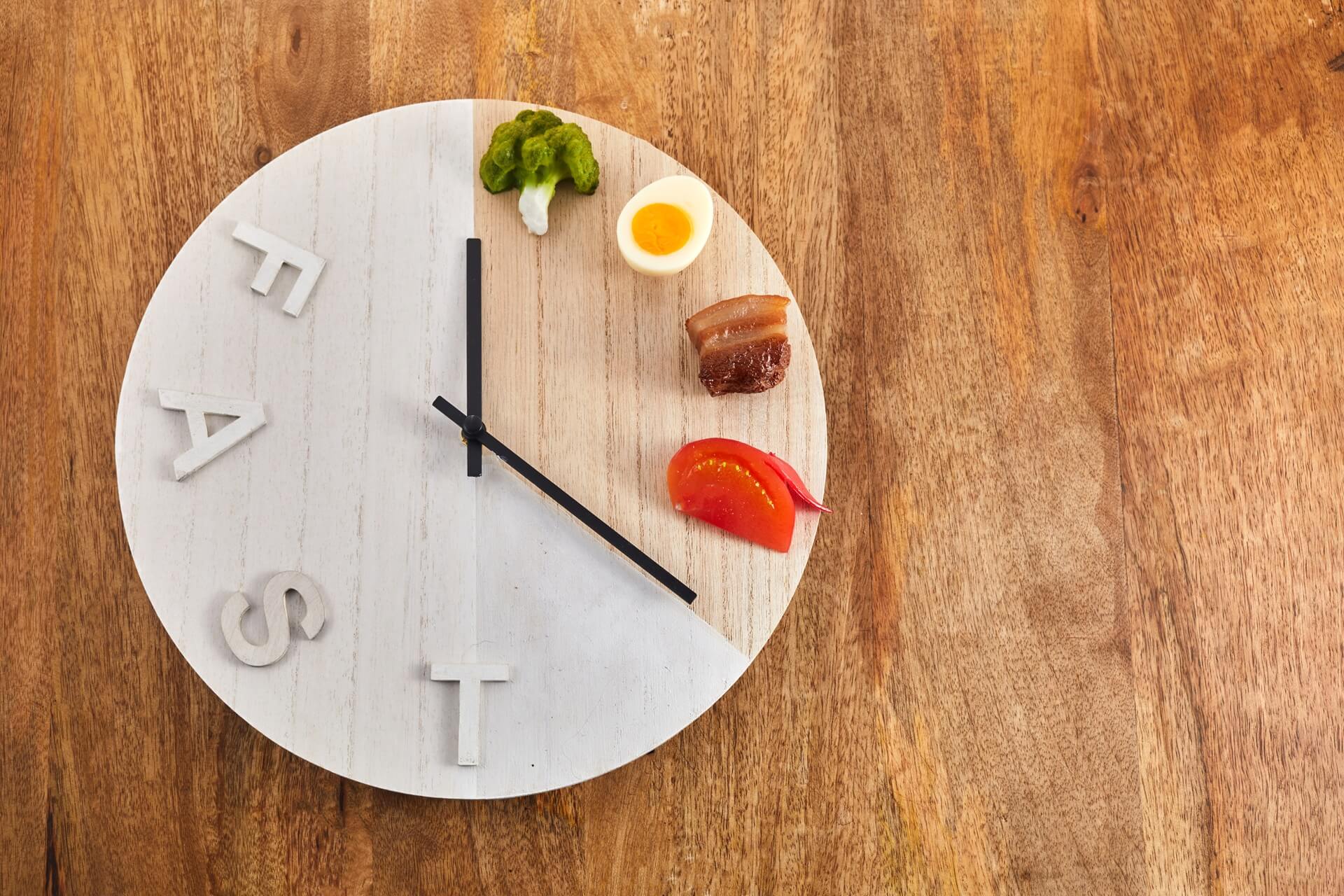
What took years to put on isn’t coming off overnight, and I knew that going in. The tool I used was simple: intermittent fasting — narrowing the window each day when I eat, and letting my body rest from food the rest of the time. No calorie-counting app. No expensive meal kits. No injections. Just willpower and a plan.
What surprised me most is that it was never really about food. It was about discipline.
Every day, that first growl of hunger became a small test: give in, or hold the line. For years I’d read Paul’s list in Galatians — love, joy, peace, patience, kindness, goodness, faithfulness, gentleness, and self-control (Galatians 5:22–23) — and mentally filed self-control in the same bucket as the rest: a nice idea, hard to actually grab hold of. Fasting made it concrete. Self-control wasn’t a feeling I was supposed to have. It was a choice I had to make, over and over, starting right around 2 p.m. when the hunger really kicked in.
It had been a long time since I’d tried fasting, and the last couple of times my blood sugar crashed and I gave up within hours. This time, praying for self-control instead of just gritting my teeth made the difference. Most mornings I eat a solid breakfast — two eggs, avocado, and bacon or smoked salmon on toasted wheat — that carries me to a healthy lunch. I joke with Linda: “Only eighteen hours to breakfast — that’s a game, not a dread.” And when you remember eight of those hours are spent asleep, it’s a lot easier than it sounds.
What Discipline Really Teaches You
That’s when another verse started hitting me differently. Paul writes, “I discipline my body and keep it under control, lest after preaching to others I myself should be disqualified” (1 Corinthians 9:27). He’s not talking about vanity or a beach body. He’s talking about the line between physical discipline and spiritual integrity — how we treat our bodies is tangled up with whether our witness holds together. I’d read that verse a dozen times and always applied it to sexual temptation or laziness in ministry. I never once thought about it standing in front of an open refrigerator at 3 p.m. But there it was. Every time I closed that door and walked away, I was working the same muscle Paul was talking about.
A Few Food Hacks
When I get hungry, I remind myself my body is feasting on fat — the longer I hold off, the more it works in my favor. And I’ve stopped believing the lie that breakfast cereal and milk companies have sold us for decades about breakfast being the most important meal of the day. Convenient, sure. Healthy, not so much — cereal is empty carbs that leave me hungry again in an hour, and cow’s milk is built to make a calf big, not to slim a grown man down. We switched to almond milk years ago and never looked back.
Another problem with my old grazing habit was energy — or the lack of it. Mid-morning would send me back to the convenience store for a Monster energy drink, always conveniently on a buy-two-get-one sale designed to keep me buying and staying hooked. And that’s before you even look at the label — a wall of ingredients I can’t pronounce, stacked on top of a caffeine load that’s not doing my heart any favors.
Linda had been after me for years to kick that habit, and I’d tried — and failed — more than once. Then one day, praying about it, I remembered senior year of college, when all-nighters before finals drove us to No-Doz, a caffeine pill that did the job of a cup of coffee (which I’ve never been able to stomach) without the taste. My roommate Frank got so tired of someone raiding his stash from his desk in the library that he swapped the No-Doz for Nytol. Same first letter, very different result — and the raiding stopped that same night.
Discipline Doesn’t Stay in the Kitchen
That discipline didn’t stop with food. It started spilling into everything else. My prayer time got sharper — it’s hard to sit still and listen for God when your stomach is growling, but once I pushed through that, the quiet got quieter, if that makes sense. My patience with Linda improved. My focus at work, writing books from home (WatermanCG.com), picked up too. Saying no to convenience store runs turned out to be good practice for saying no to my phone, my temper, and a dozen other small surrenders I’d stopped even noticing I was making.
Physically, the change was real too. Once my body adjusted — and yes, that first week was rough — my energy stopped crashing the way it used to. I wasn’t riding the blood-sugar rollercoaster of grazing all day anymore. When I ate, I ate well. When I was fasting, I was bored, not hungry — I’d go to the fridge for a small swig of apple cider vinegar or a low-sugar Dole powdered juice drink that comes in small sleeves I can take anywhere and mix in water, just enough to give my mouth some flavor without breaking the fast. And these packets help me avoid sugary sodas too!
I slept better. I felt lighter — not just on the scale, but in how I moved through the day. And I noticed I was leaning into God instead of the fridge, the carb cabinet, or the gas station.
Being Honest With You
This isn’t a magic bullet, and it isn’t for everyone. I haven’t got it all figured out. Some days I mess up and get right back on it — because this isn’t a program or a diet, it’s a lifestyle, and that’s the difference that makes the difference. Seeing Linda proud of me has been its own reward, and it’s inspired her to work at her own fitness too. My decision to choose fitness over fatness ended up impacting her as well.
If you have health conditions, take medications, or have a history of disordered eating, talk to your doctor before changing how or when you eat. What worked for me was starting slow — pushing breakfast back an hour at a time until I found a rhythm that fit my life, instead of trying to be a hero in day one.
If you want to understand the science behind this, look up intermittent fasting or time-restricted eating and see what it does to help your body clear out the buildup from years of processed food. Here’s a small proof of how much food affects you: we had a meeting today at a restaurant, and I had half of a toasted Italian sub and a small bowl of tomato soup. Less than an hour later, I had a three-Advil headache I hadn’t had in weeks. Still think bad food doesn’t touch your body?
My Challenge to You
Here’s my challenge, brother: find one area where you’ve been giving in to comfort instead of exercising discipline. It doesn’t have to be food. Maybe it’s your phone. Maybe it’s your temper. Maybe it’s how you spend your time, your money, or your eyes. Fasting taught me that self-control is a muscle, and the more you use it, the stronger it gets — and the more it strengthens everything else, including the parts of your walk with God you didn’t think had anything to do with your body.
I didn’t just lose weight this month. I found out I still have some fight left in me — and that fight is worship, in its own quiet way. As Paul writes in 1 Timothy 6:12, “Fight the good fight of the faith.” So keep fighting to become more disciplined in every area of your life, and watch what happens when you start saying no to the things that are killing you slowly and yes to the things that build you up.
Keep praying for my fight to get back to a healthy weight. If you want tips, prayer, or encouragement on this, email me at Reen@WatermanCG.com.
Stay strong, stay disciplined, stay refreshed.