The Freedom of a Phone-Fast
As I write this month’s column, I’m preparing the keynote message for a men’s breakfast entitled “Wake-Up, Men,” drawn from a book I’m writing on how easily men can grow their faith if they want to. One discipline I’ll be covering is fasting described as a “practice that takes practice,” but one that produces real growth and mastery over our human “appetites.”
I’ve practiced fasting for 36 years. (I still smile remembering my first fasting class, when Dave Dionne walked in carrying a box of donuts and asked, “Is this the fasting class?”) In the past I’ve fasted from sweets, television, and even succeeded at a 5-day juice and water fast. But the most challenging fast I ever completed happened last week, entirely by accident.
Linda and I were honored to be selected to write the 100th Anniversary Celebration book for Southern Champion Tray, an outstanding Christian company here in Chattanooga. After three and a half rigorous weeks of nonstop interviews, all recorded on my phone, Linda wisely decided I needed a break and arranged a few days in Gatlinburg.
Packing for the trip, I realized I hadn’t yet downloaded several key interviews from my phone to my laptop. Not wanting to risk losing them, I made the decision to leave my phone on my desk.
I never felt so naked in my life.
Logically, I knew we’d have Linda’s phone for GPS and emergencies. Anyone who truly needed me could call her first. Three days without my phone — no sweat, right?
Wrong. Like someone coming off an addiction, I had an unsettling first 24 hours. I kept reaching for my phone wallet only to find nothing in my pocket. Linda caught me doing it multiple times and said, with that knowing look of hers, “See? I told you that you had a problem.” I told her I felt like a hunter who’d left his bullets at home.
I’d grown so accustomed to scrolling and filling every spare moment with the latest news, or watching YouTube videos on fishing, hunting, and WWII, that I hadn’t even recognized it as an addiction. So as my unintentional fast progressed, I made a decision: I would make the best of it and stay open to what God might want to show me.
When I waited in the car while Linda slipped into an outlet store, instead of scrolling, I prayed. Or I pulled out the book I’d brought along. One of my car rules is A.C.B.: Always Carry a Book.
And I survived.
More than survived, actually. Without the constant stream of war updates, political news, and negative headlines, I felt a growing sense of peace. I began to ask honest questions: How does watching hunting and fishing videos draw me closer to God or grow my business? And those WWII documentaries I loved — hours spent absorbing stories of death and destruction — how was that edifying my spirit?
Without my phone, I couldn’t check email. But I could talk more with God and with Linda, whose love language is quality time, which my phone habit had quietly been stealing from her.
Here’s the irony: what began as a struggle ended in unexpected freedom. By day three, I felt more peaceful, more relaxed, closer to God, and more present with my wife. I also finished a book on procrastination I’d been putting off for months titled, Procrastination Proof by John Acuff. Brand new, and a must-read.
When we got home, I picked up my phone and checked my messages. Do you know how many critically urgent calls, texts, and emails I had missed?
Zero. Nada. Zilch.
Okay, God — point taken.
Romans 12:2 (AMP) came to mind immediately:
“Do not be conformed to this world [any longer with its superficial values and customs], but be transformed and progressively changed [as you mature spiritually] by the renewing of your mind [focusing on godly values and ethical attitudes], so that you may prove [for yourselves] what the will of God is, that which is good and acceptable and perfect.”
Within minutes of getting home, I did something radical: I deleted YouTube from my phone entirely (not just from the home screen), and reset Google to a search engine only, not a scrollable news feed.
More than a week later, my phone is still just a phone. A communication tool. Not a controller of my spare moments. I’m praying it stays that way.
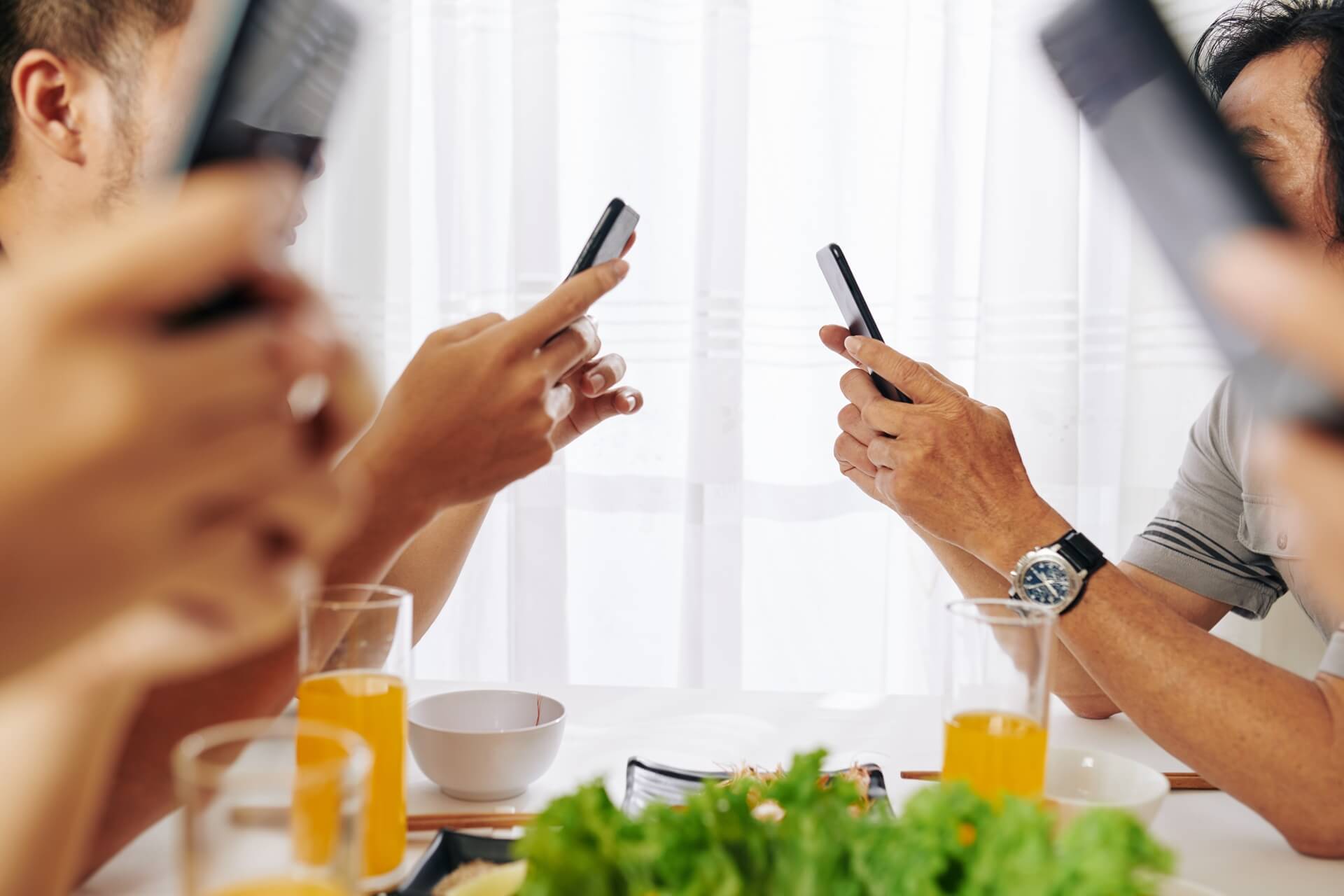
Maybe you think your phone use is fine. Consider these numbers:
- 53% of Americans want to cut back on phone use; 49% feel they’re addicted.
- American adults average 7 hours a day on their phones… more than most people sleep.
- The average person checks their phone 96 times a day.
- People spending 6+ hours daily on their phones show a 43% higher depression rate and 37% higher anxiety rate than moderate users with social media scrolling as the strongest negative factor.
- Adults who limited smartphone use to under 2 hours a day saw measurable improvements in mood and stress within just a few weeks.
Most U.S. adults spend roughly 40% of their waking hours watching their screens. And most know they shouldn’t.
From a spiritual standpoint, if you’re being distracted, detoured, and depressed by videos, news feeds, and social media, you will focus less on God and less on the people He’s placed in your life.
So, what are you going to do about it?
I challenge you to try a Phone Fast. Start with a weekend day. Lock up the phones and open a real conversation with your spouse or your kids. You might be surprised what you find on the other side of the silence.
As Paul writes in Philippians 4:13 (AMP):
“I can do all things [which He has called me to do] through Him who strengthens and empowers me — I am ready for anything and equal to anything through Him who infuses me with inner strength and confident peace.”
The choice is yours. And the grace is already available.